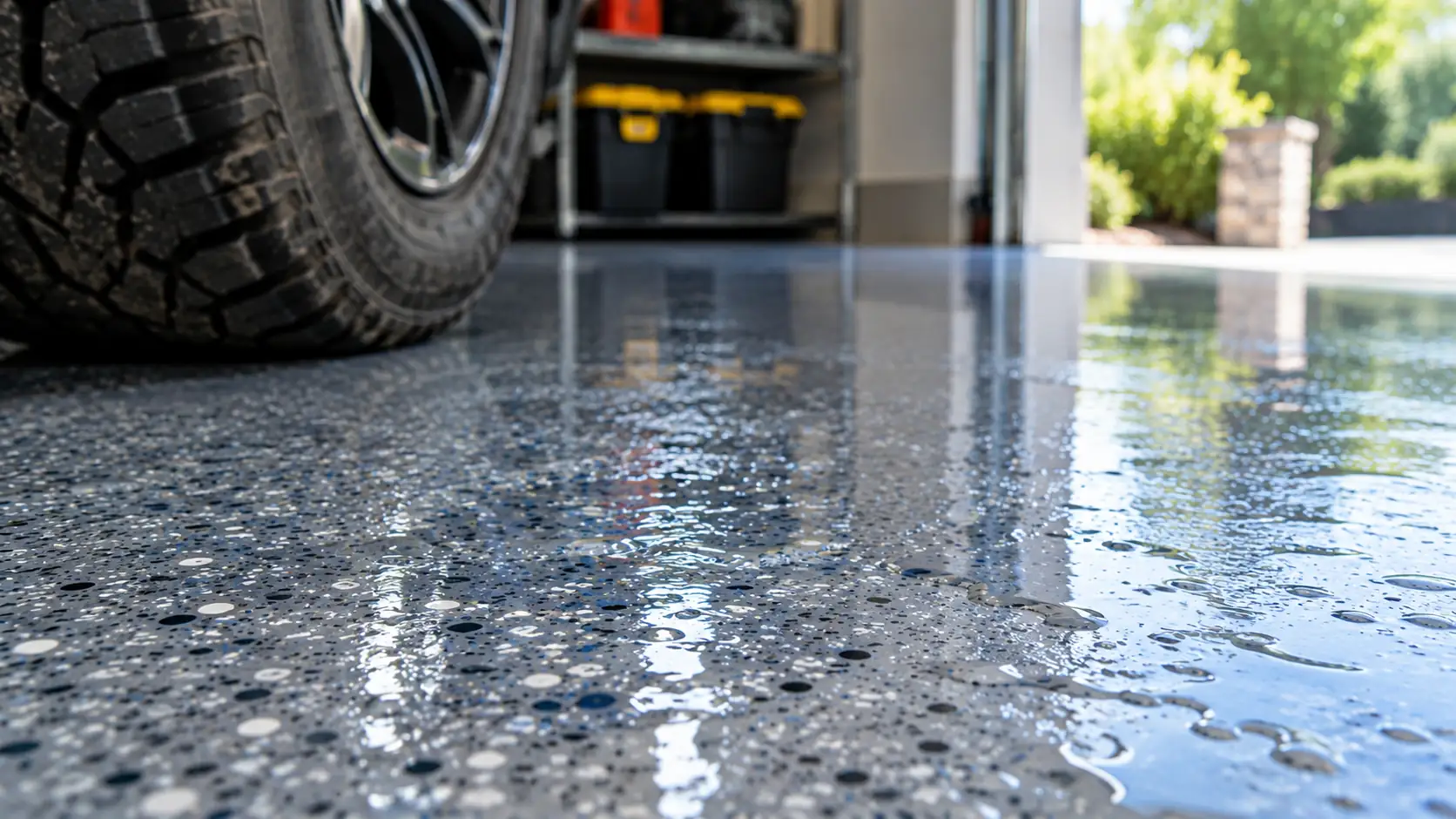
Smooth, standard epoxy floor coatings can become slick when exposed to standing water, automotive fluids, or winter rain tracked into residential spaces. However, incorporating specialized aggregate texturizing agents or aluminum oxide micro-beads into the topcoat easily exceeds industry slip-resistance standards.
Homeowners throughout Northern California experience distinct seasonal shifts, from torrential winter storms in Roseville and Rocklin to high-traffic pool deck usage in Granite Bay, Lincoln, Loomis, Citrus Heights, and Folsom. Roseville Epoxy Flooring engineers every multi-layer protective flooring application with precise traction additives tailored to specific household environments.
Understanding Slip Resistance Metrics and Standards
Evaluating flooring safety requires looking beyond subjective appearance to measurable engineering metrics. The flooring industry relies on standardized testing to quantify traction under wet and dry conditions.
The accepted benchmark for level interior and transition spaces is the Dynamic Coefficient of Friction (DCOF). According to technical testing guidelines outlined by the Sherwin-Williams Resinous Flooring Guide, surfaces expected to encounter moisture should achieve a wet DCOF rating of 0.42 or higher. Professional resinous floor systems integrated with proper texturizing media comfortably outperform this threshold, minimizing slip-and-fall hazards even during heavy downpours.
| Friction Standard / Metric | Target Threshold | Application Relevance |
| ANSI A326.3 Wet DCOF | $\ge 0.42$ | Minimum safety baseline for level interior floors subjected to wet conditions. |
| Standard Smooth Epoxy | $0.25 – 0.35$ | Highly slick when wet; requires supplemental aggregate for high-moisture zones. |
| Textured Polyaspartic Topcoat | $0.50 – 0.65+$ | High-traction surface profile maintaining grip under water, oil, and mud exposure. |
Common Traction Additives for Resinous Systems
Achieving the right balance between slip resistance and cleanability depends on selecting the proper aggregate material blended into the final clear topcoat. Different minerals offer distinct physical profiles.
- Aluminum Oxide Grits: Extremely hard microscopic crystals that provide maximum abrasion resistance and exceptional slip prevention without altering the visual clarity of the decorative flake or metallic base.
- Color Quartz Aggregates: Specially graded ceramic-coated quartz granules broadcast into the base resin, creating a dense, multi-colored textured matrix ideal for high-impact workshops and commercial entries.
- Polymer / Polypropylene Beads: Spherical microscopic polymer particles that soften the aggressive bite of sharp mineral grits, making the floor comfortable for bare feet while still providing reliable wet traction.
Space-by-Space Traction Recommendations Across Local Homes
Not every room in a Northern California home requires the same level of surface texture. Tailoring the grit profile to the specific environment optimizes both safety and ease of maintenance.
| Room or Living Area | Recommended Traction Profile | Primary Risk Factor |
| Residential Garage | Medium Aluminum Oxide | Rainwater, automotive fluids, mud, and garden hose overspray. |
| Pool Houses & Patios | Coarse Polymer Bead Blend | Barefoot traffic, standing water, and organic algae growth. |
| Basements & Workshops | Standard Quartz Broadcast | Heavy foot traffic, spilled liquids, and dropped tools. |
| Interior Laundry Rooms | Fine Micro-Bead Additive | Occasional appliance leaks, detergent spills, and smooth shoe soles. |
How Regional Weather Influences Floor Safety
Placer County and the Greater Sacramento area experience microclimates that directly affect home maintenance. During winter months, atmospheric rivers push moisture inland, causing vehicles to deposit water, mud, and road debris onto garage slabs. Untextured resin surfaces turn slick instantly under these conditions.
Conversely, intense summer heat waves cause homeowners to frequently access outdoor spaces, wet patios, and pool zones. Implementing a measured, professional-grade anti-slip additive package ensures that family members and guests traverse transition areas safely year-round, regardless of seasonal temperature swings or sudden precipitation.
Maintaining Slip-Resistant Floors Without Losing Traction
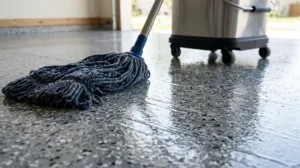
A common concern among property owners is whether adding texture to an epoxy floor makes it difficult to clean or mop. Professional installations apply the anti-slip aggregate directly into the final protective topcoat layer rather than the base coat. This encapsulates the media securely while preserving a smooth enough surface valley to prevent dirt trapping.
- Regular Sweeping: Remove loose grit, gravel, and debris with a soft-bristle push broom to prevent micro-abrasions under foot traffic.
- Periodic Mopping: Clean the surface using a neutral pH cleaner mixed with warm water; avoid harsh solvent-based detergents that can dull the gloss finish.
- Squeegee Drying: In heavy moisture zones like mudrooms or exterior patios, use a rubber floor squeegee to direct standing water toward drainage points.
Secure Your Home With Safe, Durable Flooring
Balancing high-end aesthetics with uncompromising safety protects your household from avoidable accidents. Roseville Epoxy Flooring customizes slip-resistant topcoat specifications for residences across Roseville, Rocklin, Granite Bay, Lincoln, Loomis, Citrus Heights, and Folsom. Visit our contact page to consult with our flooring specialists today.