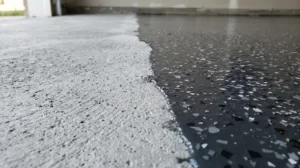
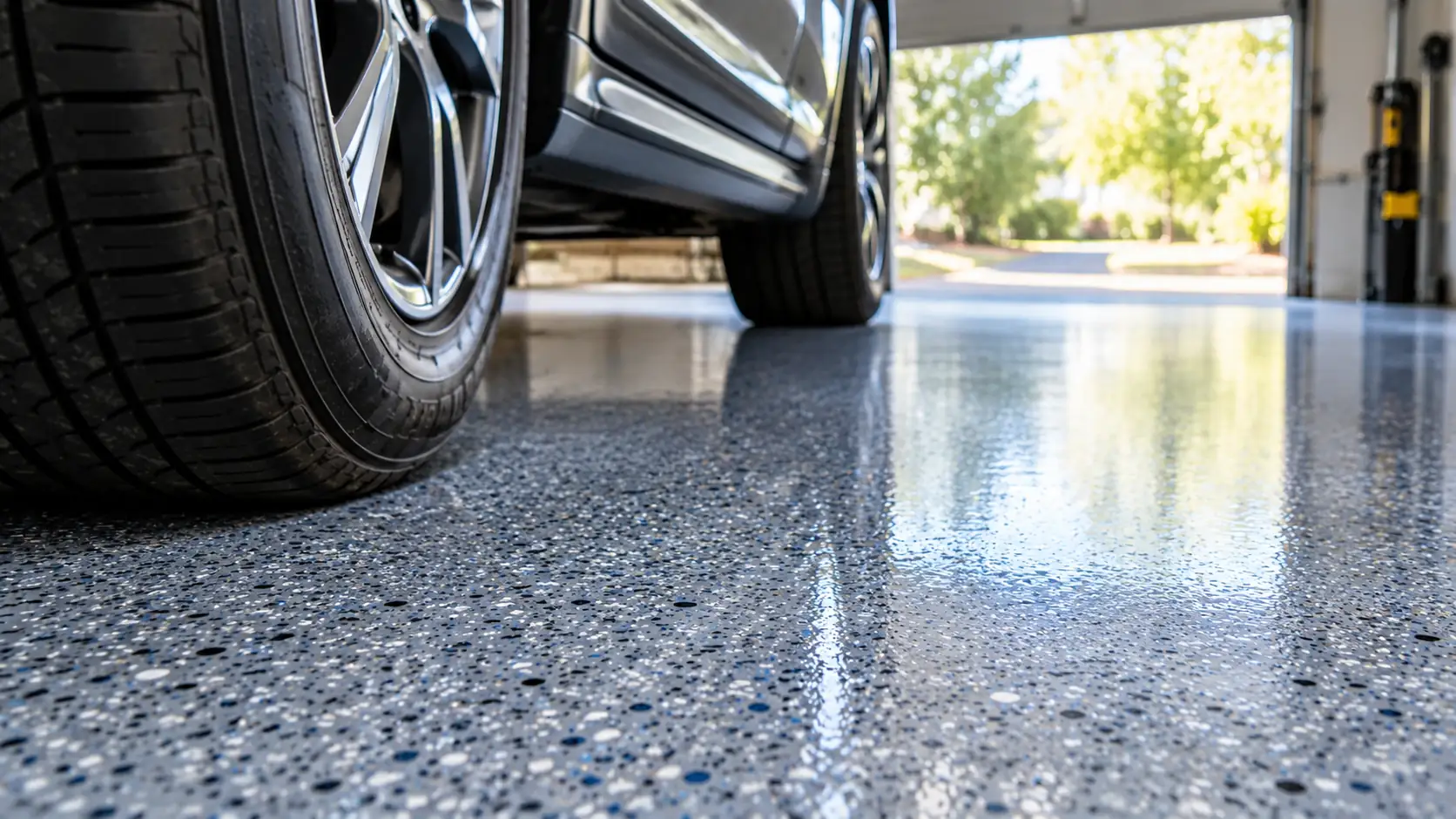
Professionally installed industrial epoxy systems topped with UV-stable polyaspartic resin withstand extreme Northern California summer temperatures exceeding 100°F and heavy vehicle traffic without lifting. Standard consumer-grade DIY epoxy kits soften under thermal stress, resulting in adhesive failure known as hot-tire pickup.
Across Placer County and the Greater Sacramento region, residential garages face intense seasonal heat waves. When vehicles return from asphalt highways in Roseville, Rocklin, Granite Bay, Lincoln, Loomis, Citrus Heights, and Folsom, tires retain massive thermal energy. Roseville Epoxy Flooring engineers coating installations specifically to combat these regional climate stressors.
The Physics of Hot-Tire Pickup in the Central Valley
Hot-tire pickup occurs when vehicle tires reach internal temperatures between 135°F and 150°F after sustained highway driving. When a 4,000-pound vehicle parks on a concrete slab, that heat transfers directly into the floor coating.
Modern high-performance tires contain chemical plasticizers that keep rubber pliable. Under high heat and tire pressure (35 to 45 PSI), these plasticizers leach out of the rubber and chemically attack vulnerable resin surfaces. As the vehicle cools down, the tire contracts and exerts an immense vertical pulling force on the softened coating. If the bond strength or resin thermal threshold is inferior, the coating delaminates and rips away from the concrete slab.
Coating Performance Under Extreme Thermal Stress
Different resin chemistries react drastically differently when exposed to Sacramento Valley summer conditions. Selecting the correct polymer structure dictates whether a floor survives its first July.
| Coating System Type | Maximum Heat Tolerance | Hot-Resistance Mechanism | Susceptibility to Summer Failure |
| Water-Based DIY Kits | Up to 110°F | Thin single-layer film build; low cross-link density. | High: Fails within 3 to 12 months under daily commuter traffic. |
| 100% Solids Epoxy Base | Up to 140°F | Thick build (10 to 20 mils) designed to absorb thermal load. | Moderate: Requires a dedicated topcoat to prevent surface marring. |
| Polyaspartic Topcoat System | 200°F+ | Chemically cross-linked aliphatic polyurea matrix. | None: Resists plasticizer migration and extreme tire heat indefinitely. |
Heavy Vehicle Traffic and Weight Distribution
Residential driveways and garages across Placer County house a diverse mix of vehicles, from lightweight sedans to heavy electric vehicles (EVs) and dual-axle pickup trucks. Heavy EVs exert significantly higher localized ground pressure per square inch due to massive battery packs, intensifying mechanical stress on garage floors.
When heavy vehicles execute tight steering pivots on unreinforced concrete coatings, shear forces exceed 50 PSI across the contact patch. Industrial-grade flooring solutions distribute these point loads evenly across a mechanically profiled substrate, preventing micro-tearing and edge delamination. For technical background on adhesion failures and surface mechanics, review industry benchmarks via For Construction Pros.
Why Mechanical Preparation Defeats Thermal Failure
A floor coating is only as durable as its mechanical connection to the concrete substrate. Acid-etching kits popular in hardware stores leave a shallow, irregular surface profile that fails under thermal expansion and contraction.
Professional installations utilize industrial diamond-grinding equipment to open the concrete pores completely. This process exposes clean aggregate structure, allowing epoxy primers to penetrate deep into the capillaries of the slab. The result is a structural bond capable of withstanding the expansion forces of hot summer tires without lifting.
Core Best Practices for Summer Concrete Protection
- Strict Cure Windows: Allow newly installed polyaspartic systems a full 24 to 72 hours before introducing vehicle traffic, particularly during high-ambient-temperature weeks.
- Avoid Hard Pivots: Refrain from dry-steering or cranking your steering wheel while stationary on the garage floor during the initial 14-day cure phase.
- Thermal Management: Allow tires to cool down for 15 minutes after high-speed interstate travel before parking inside enclosed residential garages.
- Professional Topcoating: Always demand a dedicated aliphatic polyaspartic or UV-stable urethane topcoat that resists ambering and thermal softening.
Safeguard Your Garage Floor Today
Protecting your investment against the demanding climate of Northern California requires engineering-grade materials and expert preparation. Roseville Epoxy Flooring builds high-performance flooring systems designed to handle intense summer heat and heavy daily traffic across Roseville, Rocklin, Granite Bay, Lincoln, Loomis, Citrus Heights, and Folsom. Visit our contact page to consult with a local flooring specialist today.