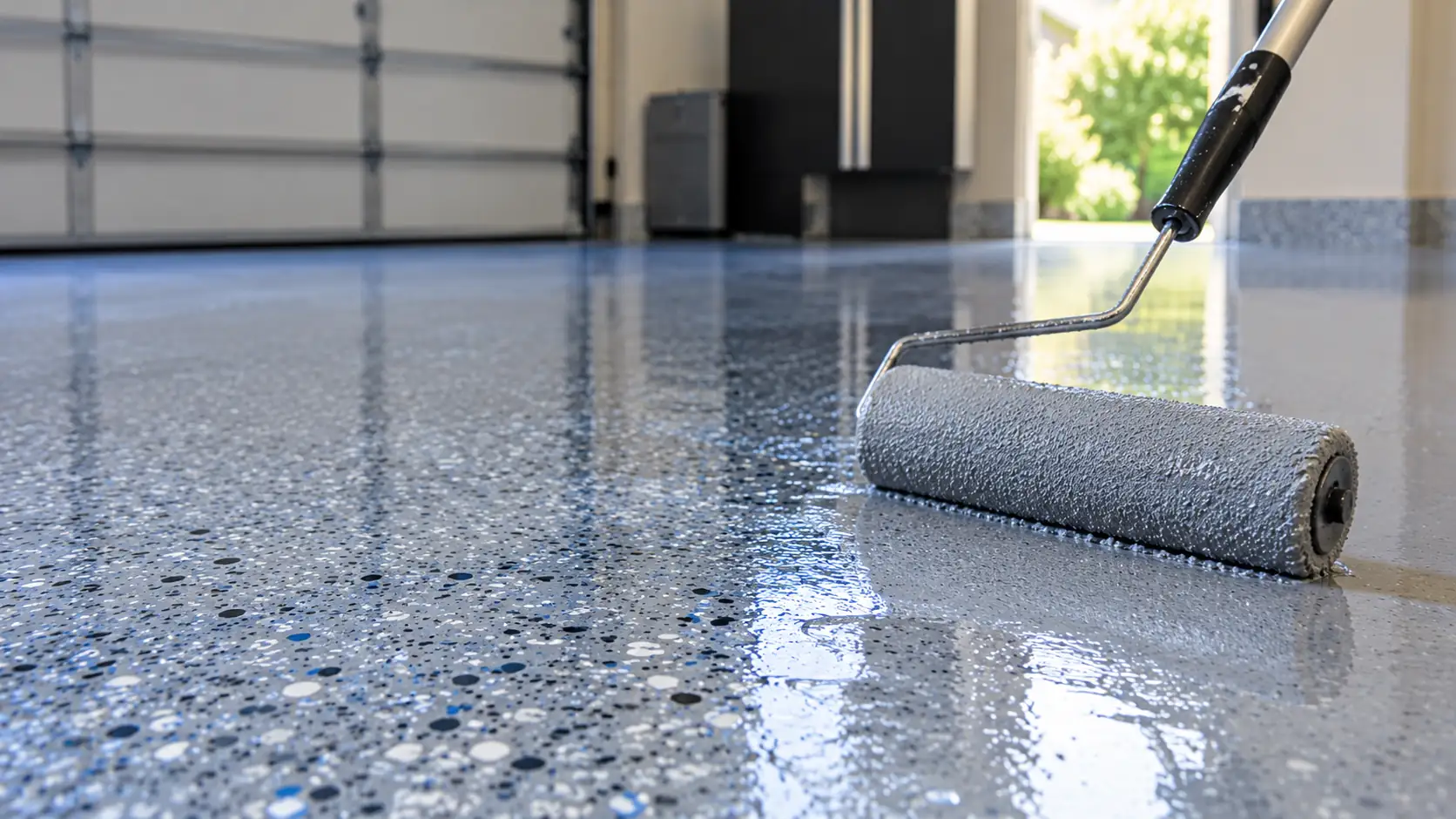
Professional residential epoxy flooring installation takes between 1 to 2 days of active on-site work, followed by a 3 to 7 day curing window before heavy vehicle traffic is permitted. Total project completion depends primarily on concrete slab condition, square footage, and ambient temperature ranges across Roseville, Rocklin, and the Greater Sacramento region.
Homeowners across South Placer County and Sacramento require precise scheduling to manage vehicle displacement and home access during coating renovations. Roseville Epoxy Flooring executes systematic installation protocols tailored to regional environmental conditions in Roseville, Granite Bay, Lincoln, Loomis, Citrus Heights, and Folsom.
Phase-by-Phase Installation Breakdown
Achieving a permanent, industrial-grade chemical bond requires a rigid multi-step process. Skipping or rushing any single phase results in premature delamination or surface bubbling.
| Project Phase | Typical Duration | Technical Description |
| Phase 1: Inspection & Prep | 3 to 6 hours | Mechanical diamond grinding opens concrete pores, removes old sealers, and eliminates surface laitance. |
| Phase 2: Repair & Patching | 2 to 4 hours | Filling structural cracks, pits, and spalls with high-strength polyurea or epoxy patch compounds. |
| Phase 3: Primer Application | 2 to 4 hours (plus 8-12 hr cure) | Applying a deep-penetrating moisture-mitigating epoxy primer to lock out sub-slab vapor pressure. |
| Phase 4: Base Coat & Chips | 3 to 5 hours | Laying down pigmented colored base resins followed by uniform decorative vinyl flake broadcasting. |
| Phase 5: Topcoat Sealing | 2 to 3 hours (plus 24-72 hr cure) | Rolling out UV-stable aliphatic polyaspartic topcoats to deliver chemical and scratch resistance. |
Garage Size vs. Active Installation Timeline
The physical square footage of the garage or interior space directly dictates active labor hours. Larger footprints demand extended mechanical grinding passes and meticulous material rollout windows.
| Garage Size & Type | Square Footage | Active On-Site Labor | Full Vehicle Return Window |
| Single-Car Garage | 200 – 350 sq. ft. | 1 Day | 5 Days |
| Standard 2-Car Garage | 360 – 576 sq. ft. | 1 to 2 Days | 5 to 7 Days |
| Oversized 3-Car Garage | 576 – 850 sq. ft. | 2 Days | 7 Days |
| Basement / Workshop Space | 400 – 1,000 sq. ft. | 2 to 3 Days | 5 to 7 Days |
Key Factors That Extend Project Timelines
While standard residential garages follow a predictable 48-to-96-hour total cycle, specific job-site conditions can extend project schedules by 24 to 48 hours.
- Severe Concrete Contamination: Slabs heavily saturated with motor oil, hydraulic fluid, or previous failed paints require chemical degreasing, multiple grinding passes, or specialized shot-blasting.
- High Moisture Vapor Emission Rates: Sub-slabs exhibiting elevated hydrostatic pressure require moisture vapor barrier priming systems that mandate extended chemical curing times before topcoating.
- Placer County Climate and Temperature Control: The Central Valley and foothill climates introduce distinct thermal challenges. Summer temperatures in Roseville and Lincoln can cause garage slabs to exceed 100°F, shortening resin pot life, while winter mornings in Loomis require monitoring to ensure concrete remains above 50°F for proper curing.
- Complex Decorative Flake or Metallic Designs: Multi-color custom metallic blends or full-broadcast quartz systems require meticulous scraping, vacuuming, and multiple clear topcoat layers.
Understanding Curing vs. Drying Windows
Distinguishing between surface dryness and chemical cure prevents accidental damage to newly coated floors. A floor that feels dry to the touch is not yet chemically hardened.
- Light Foot Traffic (24 Hours): Clean socks or soft-soled shoes can traverse the floor safely after 24 hours of curing.
- Light Item Placement (72 Hours): Storage racks, tool chests, and lightweight objects can be moved back onto the floor surface after 3 days.
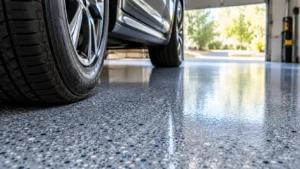
- Vehicle Parking (5 to 7 Days): Automobiles, trucks, and heavy equipment must remain off the surface for a minimum of 5 to 7 days to prevent tire shear delamination.
- Full Chemical Cure (30 Days): The polymer matrix reaches 100% cross-linked chemical resistance and hardness after one full month. For comprehensive background on decorative flooring methods and structural specifications, consult The Concrete Network’s Floor Installation Guide.
Plan Your Installation Project Today
Knowing what to expect during your flooring upgrade ensures a smooth transition and a flawless final result. Roseville Epoxy Flooring delivers efficient, professional installations with minimal disruption across Roseville, Rocklin, Granite Bay, Lincoln, Loomis, Citrus Heights, and Folsom. Visit our contact page to schedule your project consultation today.